What Happened to the Google Guarantee Badge? What Contractors Need to Know
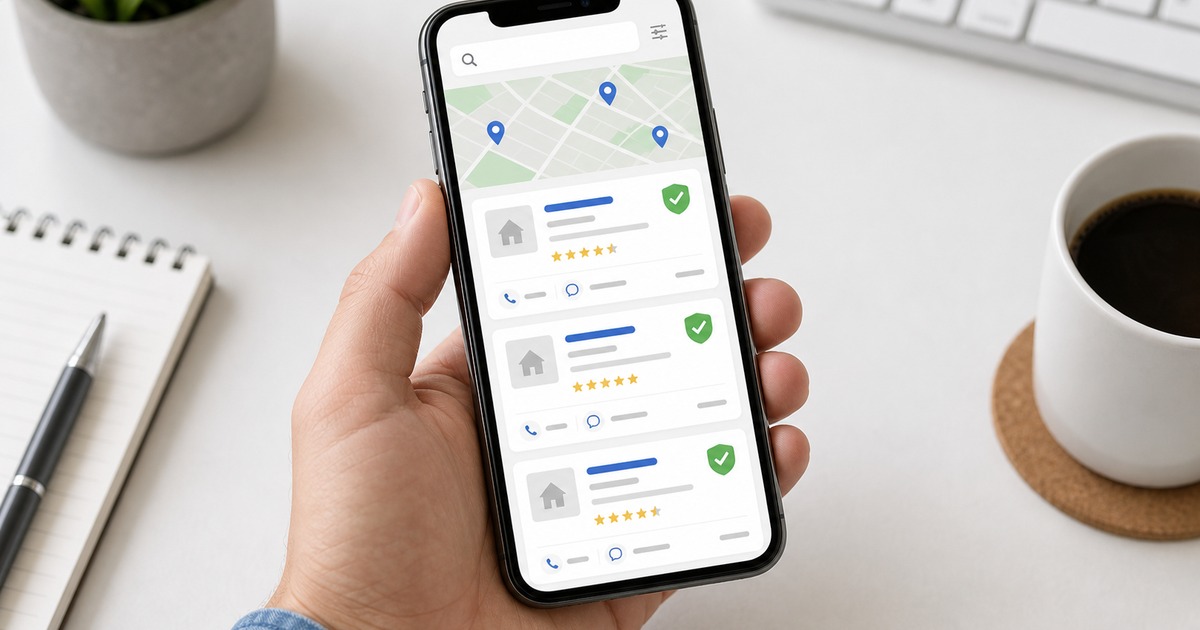
Google quietly ended one of the most trusted signals in local service advertising. On November 7, 2025, the company discontinued the $2,000 Google Guaranteed badge, replacing it with a new "Google Verified" designation that carries no consumer money-back protection. (Scorpion, Footbridge Media, Coalmarch, 2025) If you're an HVAC, roofing, or plumbing contractor, this change affects how prospects perceive your ads, and it shifts how you should build trust at the top of the page.
for background on Local Service Ads strategy
Key Takeaways
- Google discontinued the $2,000 Google Guaranteed badge on November 7, 2025, replacing it with the Google Verified badge.
- The new badge still requires background checks and license verification, but offers no consumer money-back guarantee.
- Local Service Ads still appear above regular Google Ads and deliver leads at $25-$80 CPL with a 31% booking rate. (Blue Grid Media, Apr 2026)
- Contractors should keep running LSAs, tighten review velocity, and adjust their ad stack to compensate for lost consumer trust signals.
What Was the Google Guarantee, and Why Did Contractors Rely on It?
The Google Guaranteed badge was a consumer protection program. Customers who hired a contractor through a Google Guaranteed LSA listing could claim up to $2,000 from Google if the work went wrong. (Google Support documentation, 2024) That promise gave the green checkmark real weight. Homeowners saw it and felt protected. Contractors saw it as a conversion accelerator that no organic listing or standard ad could replicate.
For contractors in competitive markets like HVAC and roofing, the badge solved a specific trust problem. A homeowner letting a stranger into their house to fix a furnace cares deeply about vetting. The $2,000 backstop answered that anxiety directly, without the contractor having to say a word. It helped close the gap between a search click and a booked job.
In our experience working with local service contractors, the Google Guaranteed badge consistently came up as one of the first things prospects mentioned when explaining why they chose a particular LSA listing over an organic result or a standard ad.
What Replaced It: the Google Verified Badge
Google's replacement, the "Google Verified" badge, preserves the vetting process but removes the financial safety net. Contractors still need to pass background checks and verify their licenses and insurance to earn the badge. (Scorpion, Nov 2025) What's gone is the $2,000 consumer reimbursement if a job goes badly.
That distinction matters more than it might first appear. The original badge did two jobs at once: it confirmed legitimacy and it transferred financial risk away from the homeowner. The new badge only does the first job. Consumers who understood what "Google Guaranteed" meant will notice the downgrade. Many won't notice at all, which creates both a challenge and an opportunity.
[CITATION CAPSULE]: Google discontinued the $2,000 Google Guaranteed badge on November 7, 2025, replacing it with the Google Verified badge. The new designation still requires contractor background checks and license verification but no longer provides consumers with a money-back guarantee if work is unsatisfactory. (Scorpion, Footbridge Media, Coalmarch, Oct-Nov 2025)
What Does This Mean for Your LSA Strategy?
The removal of the financial guarantee actually levels the playing field slightly. Previously, a contractor with a freshly earned Google Guaranteed badge could outcompete a long-standing competitor on trust alone. Now, real reviews and response time carry more weight, which rewards contractors who've been building their reputation consistently.
LSAs still run at the top of Google search results, above standard Google Ads. That placement hasn't changed. Cost per lead from LSAs currently runs $25 to $80, and the booking rate on LSA leads sits at 31%, compared to roughly 12% for standard Google Ads. (Blue Grid Media, Apr 2026) Those numbers make LSAs worth keeping, even without the guarantee.
The practical shift is this: your LSA profile now has to do more of the trust-building work that the badge used to handle automatically. Review count, review recency, and response speed become your new conversion levers.
HVAC-specific LSA benchmarks and bidding strategy
Should You Still Run Local Service Ads?
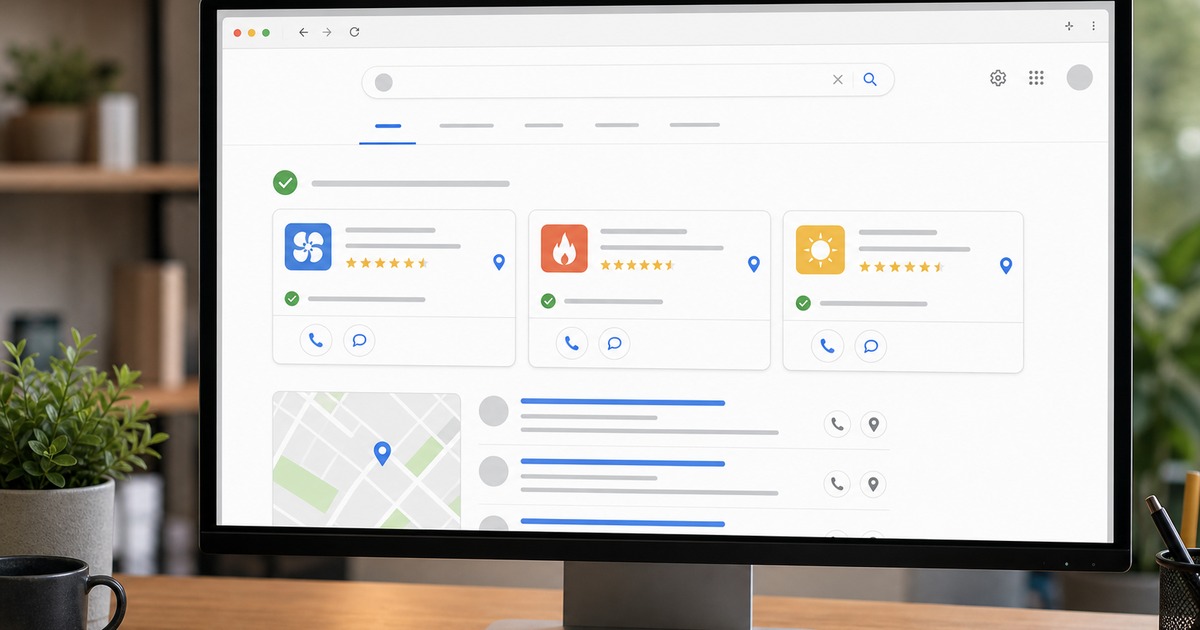
Yes, and the numbers back that up clearly. LSA CPL of $25 to $80 is among the lowest paid-acquisition costs available to local service contractors. (Blue Grid Media, Apr 2026) A booking rate of 31% means roughly one in three people who contact you through LSA become scheduled jobs. That conversion efficiency is hard to replicate with any other paid channel.
The badge change does not affect your LSA placement, your bid strategy, or your cost structure. What it changes is the psychological shorthand that prospects used when choosing between similar listings. You fill that gap with volume and quality of reviews, not by abandoning the channel.
Pausing your LSAs while you wait to see how this plays out is the wrong move. Competitors who stay active will accumulate reviews and ranking signals while you're idle. The contractors who adapt fastest will own the top spots when the dust settles.
How to Adjust Your Google Ads Stack Now
The most effective response combines three moves. First, protect your LSA profile. Keep your background check current, respond to every lead within minutes, and actively request reviews after each completed job. Google's LSA ranking algorithm weighs responsiveness and review velocity heavily.
Second, add a review-generation system if you don't have one. The Google Verified badge signals basic vetting. A profile with 80 recent five-star reviews signals something far more persuasive. Set up an automated post-job text that sends a direct Google review link. Most contractors see response rates of 15 to 25% when the request arrives within an hour of job completion.
Third, make sure your standard Google Search campaigns are structured to catch intent that LSAs might miss. LSAs show for broad service queries. Branded and competitor terms, specific service modifiers, and emergency searches often fall outside LSA coverage. A well-built search campaign running alongside your LSAs ensures you're capturing the full range of buyer intent.
Contractors who pair active LSA profiles with structured search campaigns typically see 20 to 35% lower blended CPL than those running either channel alone, based on campaign data reviewed at Demand Prism across HVAC and plumbing accounts in early 2026.
Frequently Asked Questions
Is the Google Guaranteed badge completely gone?
Yes. Google officially discontinued the $2,000 Google Guaranteed badge on November 7, 2025. (Scorpion, Footbridge Media, Coalmarch, Oct-Nov 2025) It was replaced by the Google Verified badge, which still requires background checks and license verification but carries no consumer money-back guarantee. The green checkmark still appears in LSA listings, but its meaning has changed.
full LSA setup and management guide
Do Local Service Ads still work without the guarantee?
Yes. LSAs still appear above regular Google Ads in search results. Average CPL runs $25 to $80, and LSA leads book at a 31% rate versus roughly 12% for standard Google Ads. (Blue Grid Media, Apr 2026) The financial guarantee was one trust signal among several. Reviews, response time, and profile completeness now carry that trust load.
Should contractors pause their LSA campaigns after this change?
No. Pausing would hand top-of-results placement to competitors who stay active. The right move is to maintain your LSA profile, keep reviews coming in consistently, and pair LSAs with structured search campaigns to cover the full range of buyer intent. The channel's economics haven't changed. Only the trust mechanism has.
The Bottom Line
The Google Guaranteed badge is gone, but the channel it lived in remains one of the highest-converting paid options available to local service contractors. Your cost per lead is still $25 to $80. Your booking rate is still roughly 31%. What changed is that you now need to build consumer trust through your profile and reviews rather than relying on a financial backstop badge.
Stay active on LSAs. Build your review velocity. Pair your LSA spend with a structured search campaign. Contractors who do all three will adapt quickly and maintain the lead quality they had before November 2025.
Want help restructuring your Google Ads stack after this change? Book a free strategy call and we'll audit your current setup at no cost.
understand full Google Ads strategy for local service businesses